You Do Not Need Twelve Apps to Shop Well in the Age of AI Commerce

Count the apps on your phone that exist so one business can sell you one thing. The coffee chain. The grocery delivery. The salon booking. The airline. Each one wanted a permanent place on your home screen in exchange for a transaction that takes ninety seconds.
That arrangement made a kind of sense when an app was the only way a business could reach you directly. It does not any more, and the reason is that the hard part of shopping has moved.
The app was never the point
A business wanted an app for three things: to take the order, to keep the customer, and to know who the customer was. Those are real needs. But they were solved by making you carry the cost — storage, notifications, another password, another set of card details sitting in another company's database.
The result is a folder you never open, loyalty points you forget you have, and a different login for every place you spend money. Multiply that across a city and the system is absurd on its face. Nobody designed it. It accumulated.
What AI actually changed
The useful shift is not chatbots. It is that finding and deciding no longer require you to go to a specific place and browse a specific catalogue.
Search understands intent, not keywords "Somewhere for dinner near the office that my team will actually like" is now a tractable query. It was not five years ago.
Context replaces navigation The system knows where you are, what you bought before, and who in your network has been somewhere. That is usually enough to skip the browsing entirely.
The transaction follows the decision Once you have decided, ordering and paying is a short, mechanical step. It does not need its own application. It needs to not get in the way.
The part that has to stay with you
If the apps go away, something has to carry the things that were living inside them: your rewards, your order history, your payment methods, who you trust.
That is the honest argument for one place rather than none. Not because an app is inherently good, but because the alternative to twelve fragmented records is one coherent one — and the person it should belong to is you, not twelve separate businesses each holding a partial copy.
What good looks like
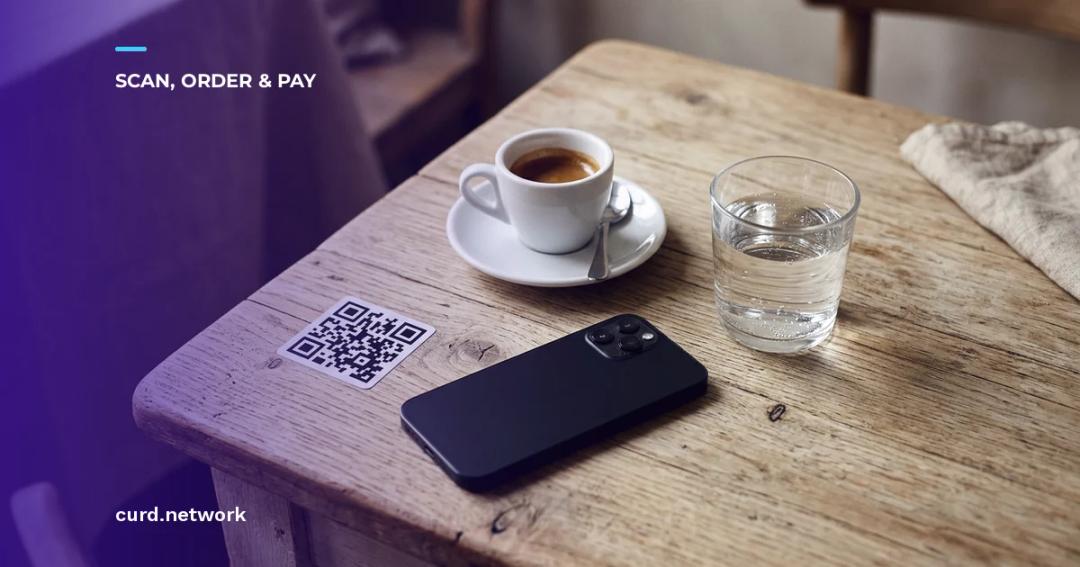
A restaurant you have never visited should be able to take your order without you installing anything — a scan at the table is enough. A restaurant you visit weekly should remember you, and so should your own record of what you have earned there.
Both of those are true at once only if the ordering layer is open and the memory layer is yours. That is the shape the next few years are converging on, and it is a better deal for the person holding the phone than the one we have now.
What to be sceptical about
Any company telling you to consolidate on them is making an argument that serves them. The test is whether leaving is possible: can you see what the system knows about you, take your records out, and spend your rewards without being locked into one merchant?
If the answer is no, it is not consolidation. It is the same lock-in with a nicer interface.
More Blogs

Decentralizing Influence: Empowering Everyday Users To Influence Business Decisions
April 2, 2024
Read More